Page 1 of 1

Religious iconography and LTROI

Posted: Sat Dec 12, 2009 11:29 pm
by lombano
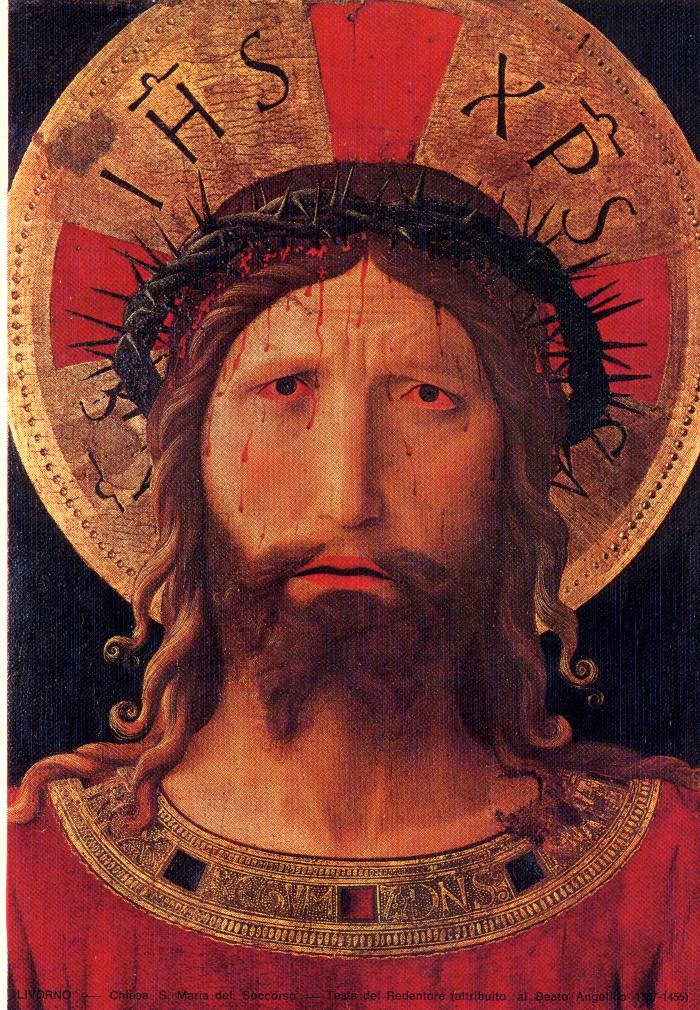
Lacenaire in another thread asked why fans like the bloody Eli images from the film, especially when one could easily find more extreme images of decapitation for example. For me the answer is that the gore in LTROI is not so much like journalistic gore, but is heavily influenced by religious iconography, particularly Catholic iconography. Alfredson was heavily influenced by painting, including Renaissance painting, and I would therefore imagine to be familiar with the religious imagery of the time. For what I find to be a crucial example, compare the following painting by Fra Angelico with the images of Eli bleeding:
Image

Miraculous statues weeping blood have also long figured in Catholic iconography:
http://en.wikipedia.org/wiki/Weeping_statue
There's a reason why the image of weeping blood is so powerful: tears are a symbol of grief, and blood is a symbol of physical pain and death. Thus combining the two and using it as a symbol of sacrifice (as done by Alfredson and Fra Angelico) is visually very powerful, in LTROI's case increased by the light-coloured, feminine blouse Eli wears, making her look more innocent and, as the frocktalk article points out, providing a good visual contrast with the blood.

Another scene influenced by religious imagery is the pool scene, which others have compared with baptism (immersion, being born to a new life, salvation, etc).

Re: Religious iconography and LTROI

Posted: Sun Dec 13, 2009 12:01 am
by Lacenaire
lombano wrote:Lacenaire in another thread asked why fans like the bloody Eli images from the film, especially when one could easily find more extreme images of decapitation for example. For me the answer is that the gore in LTROI is not so much like journalistic gore, but is heavily influenced by religious iconography, particularly Catholic iconography. Alfredson was heavily influenced by painting, including Renaissance painting, and I would therefore imagine to be familiar with the religious imagery of the time. For what I find to be a crucial example, compare the following painting by Fra Angelico with the images of Eli bleeding:

Image

Miraculous statues weeping blood have also long figured in Catholic iconography:
http://en.wikipedia.org/wiki/Weeping_statue
There's a reason why the image of weeping blood is so powerful: tears are a symbol of grief, and blood is a symbol of physical pain and death. Thus combining the two and using it as a symbol of sacrifice (as done by Alfredson and Fra Angelico) is visually very powerful, in LTROI's case increased by the light-coloured, feminine blouse Eli wears, making her look more innocent and, as the frocktalk article points out, providing a good visual contrast with the blood.

Another scene influenced by religious imagery is the pool scene, which others have compared with baptism (immersion, being born to a new life, salvation, etc).
I agree with this very much (although I see Eli very much in terms of Leonardo da Vinci paintings - she has the same kind of face including innocence, mystery and "asexuality" (sometimes even a certain "sexual ambiguity") that is so characteristic of them). But I see that quite a few posters like to show not the suffering Eli but the frightening, monster like Eli. That was what my question was about.
This is how I like to see her:
Image

Re: Religious iconography and LTROI

Posted: Sun Dec 13, 2009 12:48 am
by gattoparde59
lombano wrote:Another scene influenced by religious imagery is the pool scene, which others have compared with baptism (immersion, being born to a new life, salvation, etc).
I agree that this image of the bloody Eli is most likely inspired by religious iconography. I see it as more ambiguous however. Is Eli an innocent martyr, or a demon?

I have come to see the pool scene as one of childbirth. You have the naked Oskar, suspended in water, suffocated and then pulled out in a scene splattered with blood. He is pulled into the world by Eli. The image of Oskar head emerging from the water looks unmistakably like child birth. I see Eli as becoming a kind of parent for Oskar in that scene. (somewhere in my house is a picture of me holding my new born daughter, and my shirt is stained with blood)

Re: Religious iconography and LTROI

Posted: Sun Dec 13, 2009 2:44 am
by lombano
gattoparde59 wrote:I agree that this image of the bloody Eli is most likely inspired by religious iconography. I see it as more ambiguous however. Is Eli an innocent martyr, or a demon?
That brings up an interesting parallelism, though Alfredson is much less likely to have heard of it. Members of the Mara Salvatrucha gang (notorious for its medieval brutality) in Central America, have, or had until recently, a custom of tattooing a tear on their face for every person they've killed. Given the traditional pre-eminence of Catholicism in the region, it seems plausible that it has a connection with Catholic imagery. Alfredson would thus not be the first to re-use Catholic iconography of tears and apply it to more murderous characters. The parallelism is particularly close in the pool scene, even in that the maras sometimes resort to beheadings.
In the case of Eli, she's a monster, but in that scene I see the blood as a symbol of sacrifice (submitting herself to it of her own volition) as well as a symbol of her suffering (her being a monster, and hence subject to this vampire rule, is an affliction). Eli is not demonic, which implies a wilful choice to be evil, but is hardly 'innocent' in the normal sense of the word. Of course, as pointed out in a recent piece of seasonal fanfiction, from a religious point of view Eli seems unable to escape damnation: she can either live and commit murder, or commit suicide, which is also a sin.

gattoparde59 wrote:I have come to see the pool scene as one of childbirth. You have the naked Oskar, suspended in water, suffocated and then pulled out in a scene splattered with blood. He is pulled into the world by Eli. The image of Oskar head emerging from the water looks unmistakably like child birth. I see Eli as becoming a kind of parent for Oskar in that scene. (somewhere in my house is a picture of me holding my new born daughter, and my shirt is stained with blood)
The immersion in baptism is itself probably influenced by childbirth. To me baptism seems the closer analogy, because baptism is supposed to not just be a kind of re-birth, but also offer the possibility (without any certainty) of salvation. But yes, the blood is more like childbirth than baptism, that's a good observation.
Lacenaire wrote:I agree with this very much (although I see Eli very much in terms of Leonardo da Vinci paintings - she has the same kind of face including innocence, mystery and "asexuality" (sometimes even a certain "sexual ambiguity") that is so characteristic of them).
Yes, Eli (and to some extent Oskar) is strikingly like da Vinci's angels.

Re: Religious iconography and LTROI

Posted: Sun Dec 13, 2009 10:35 am
by Lacenaire
Alfredson in various interviews refers more than once to Renaissance painters, for example here:

"We studied a lot of Renaissance painters when we were prepping. Mostly, Hans Holbein, who was painting the royal British court in the mid-1500s. He’s using eyes in a very interesting way. Te portrayed person is not looking on the spectator, but is looking a little beside the spectator, and that is very spooky. We also looked at Raffaello (Raphael) for the color and lighting purposes. So we used a painting by Raffaello, from the Vatican, to have a color guide. He uses gray in a very interesting way, as if it was white. Because we have so much white in the film from the snow we have to find some way to communicate all this hard white light. So he helped us a lot. If you don’t know which way to turn, you can always ask the masters."

That should have been "English Court", Henry VIII was not a king of Scotland. He does not mention Leonardo da Vinci but both Raphael and Holbein studied him intensely and Holbein used a lot many of Leonardo's devices, such as "sfumato". This idea of making people look "spooky" by not having them look beside the spectator also comes form Leonardo. You can see it in one of the sketches he made for the "Eli" angel:
Image
Its the same angel as in the Virgin of the Rocks but it's harder, more masculine and, I think, a bit spooky.
Leonardo's painting and even personality remind me a lot of Eli. As is often said, for Leonardo darkness is primary - light always emerges from darkness and disappears into darkness. In addition to sfumato Leonardo also invented chiaroscuro - a kind of contrast of light and darkness that is clearly visible here:
Image
Later painters, particularly Rembrant, went further in this direction and this scene is almost Rembrandtian in this respect but the faces are very different from Rembrandt.
Most of the film however does not use such strong contrast - we see mostly gentle scenes dominated by the whiteness of snow, little contrast, simple harmonious colours - all of this more characteristic of the style of Raphael than Leonardo.
For me Raphael corresponds to Oskar. He is definitely a painter of daylight (even though he painted some very dark scenes). He himself looked like Oskar and had a very gentle, kind personality but combined with a strange detachment, so that nobody ever knew him very closely.
Leonardo, on the other hand, is one of the most enigmatic human beings ever. So much has been written about him that I don't really think it is worthwhile repeating it here. His amazing inventions and astoundingly penetrating mind remind me of Eli, as long as I think of her as someone who solved the Rubik's cube puzzle in a day rather than a retarded 12 year old as some seem to view her.
Leonardo also seemed to be very detached from all human beings - he never seemed to have any friends (if we ignore the curiously intimate relationship he had for a year with Cesare Borgia, who employed him as a military engineer - a relationship that makes many art historians even today uncomfortable).
All this does not have anything to do with Jesus's stigmata or Eli's blood but once the subject of Renaissance painters was introduced I could not resist adding these few lines.

Re: Religious iconography and LTROI

Posted: Sun Dec 13, 2009 12:53 pm
by gattoparde59
There is another thread started by contemplative life that includes a discussion of the cinematography, which I think is very relevant to this discussion.

http://www.let-the-right-one-in.com/for ... ?f=2&t=544

The blog mentioned goes into geometry, symmetry, and perspective: all important for renaissance art. I like the idea of the "long lens" versus the "wide lens." The latter is used for spectacle, or heroic frescos if you will, the former establishes either distance or intimacy which is what they were looking for in Let the Right One In.

The whole thing strikes me as very old school film making. The old black and white films really drew much of their inspiration from painting.

Re: Religious iconography and LTROI

Posted: Fri Dec 18, 2009 3:11 am
by lombano
gattoparde59 wrote:The whole thing strikes me as very old school film making. The old black and white films really drew much of their inspiration from painting.
Probably not very directly, though. They probably drew more influence from the still photography of the time, in turn heavily influenced by painting. But Alfredson directly sought inspiration in Renaissance painting.

Somewhat off-topic, maybe the difference in tone between the film and the book can be summarised as an analogy with painting: the film is like Renaissance religious painting, the book is like Goya's Black Paintings.

Re: Religious iconography and LTROI

Posted: Fri Dec 18, 2009 10:32 am
by Lacenaire
lombano wrote:
gattoparde59 wrote:The whole thing strikes me as very old school film making. The old black and white films really drew much of their inspiration from painting.
Probably not very directly, though. They probably drew more influence from the still photography of the time, in turn heavily influenced by painting. But Alfredson directly sought inspiration in Renaissance painting.

Somewhat off-topic, maybe the difference in tone between the film and the book can be summarised as an analogy with painting: the film is like Renaissance religious painting, the book is like Goya's Black Paintings.
Yes. But also somewhat like

Image

Re: Religious iconography and LTROI

Posted: Fri Dec 18, 2009 7:30 pm
by lombano
Yes, like the engravings too. I have a reproduction of that that I made in my room.